
People Counting in 2026
Everything you need to know about people counting technology
From choosing the right sensor to calculating ROI, a practical guide built on 20+ years of deployments across retail, libraries, campuses, and more. Modern people counting systems reach 98% accuracy, and this guide covers 13 topics from cost to privacy.
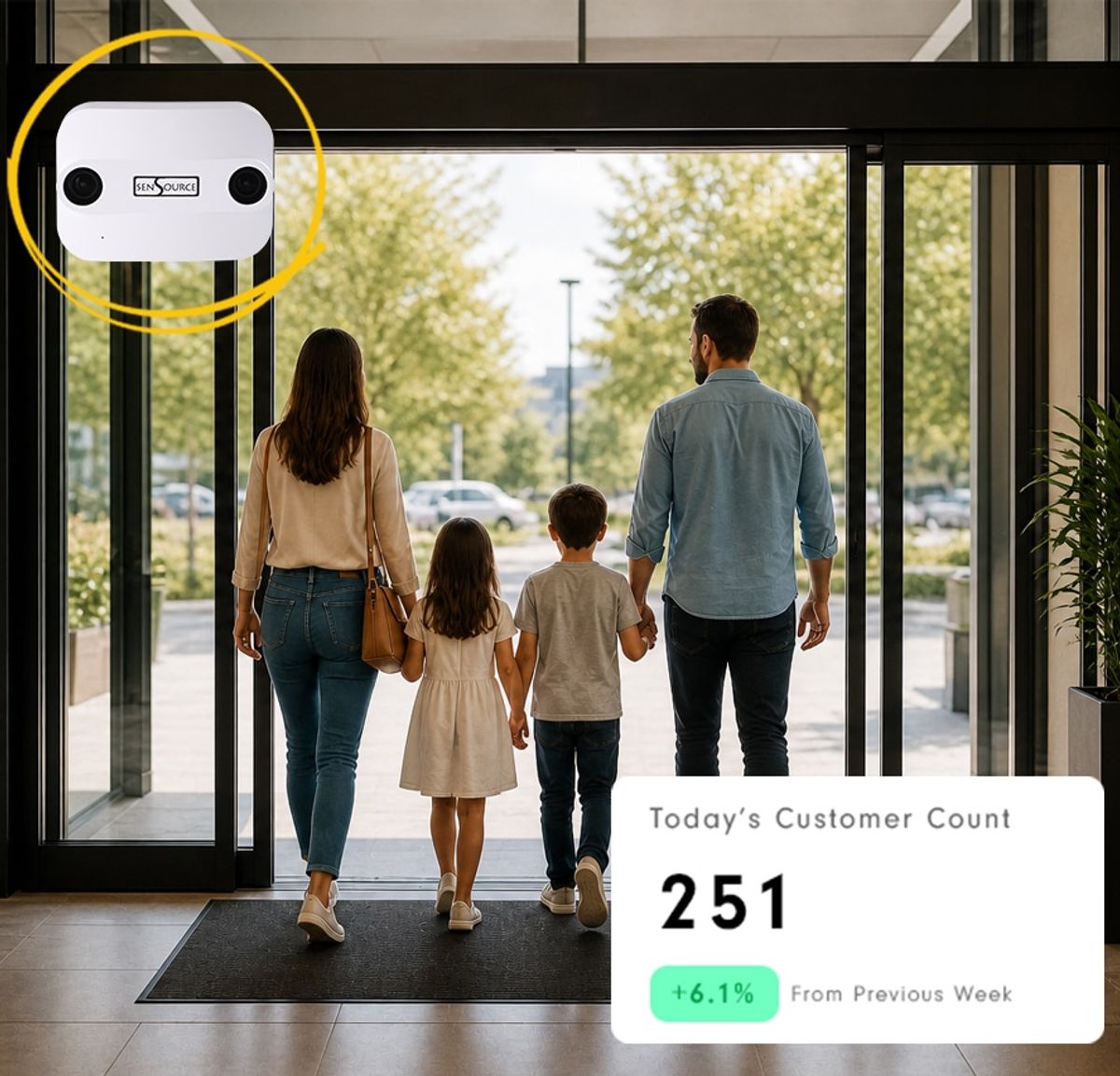
In this guide
- The state of people countingHow foot traffic data went from nice-to-have to need-to-know
- Purpose of people countingWhy organizations count the people who visit
- Industries that use itMost visitedRetail, libraries, campuses, amusement — how each sector applies the data
- AccuracyHow accurate modern-day systems are
- Technology comparisonMost visitedIR, video, thermal, and AI-based sensors side-by-side
- History of people counting devicesFrom break-beam to thermal imaging to stereo video
- Things to considerWhat to plan before implementation
- CostMost visitedWhat drives pricing, what to budget, and how to compare quotes
- How many counters you needHow to estimate the number of sensors for your space
- InstallationHow people counting hardware is installed
- Privacy & complianceWhether people counting cameras pose a privacy concern
- Business metricsThe business metrics people counting data reveals
- Key featuresWhat to look for in a people counting solution
- Business impactWhat level of business impact to expect
- Solution providersThe top end-to-end people counting providers in the U.S.
The State of People Counting: How We Got Here
For decades, organizations have tracked how many people enter their buildings to support smarter funding, staffing, and planning decisions. What was once a “nice to have” data point has quickly become a “need to know” metric for driving strategic business decisions.
The COVID-19 pandemic accelerated this shift. Suddenly, understanding real-time building occupancy was essential to meeting public safety requirements. Technologies like automated people counters, previously operating quietly in the background, moved front and center, with public-facing displays showing visitors whether they could enter or needed to wait.
While occupancy mandates have since been lifted and daily operations have largely returned to normal, the value of foot traffic data has only grown. Advances in data warehouses, AI, and integrated business systems now make it easier than ever to combine foot traffic analytics with sources like point-of-sale and staffing data, turning raw counts into actionable insight.
What is the purpose of people counting?
- Justify funding (libraries, museums, etc.)
- Calculate conversion rates (retail)
- Plan staffing levels
- Monitor occupancy
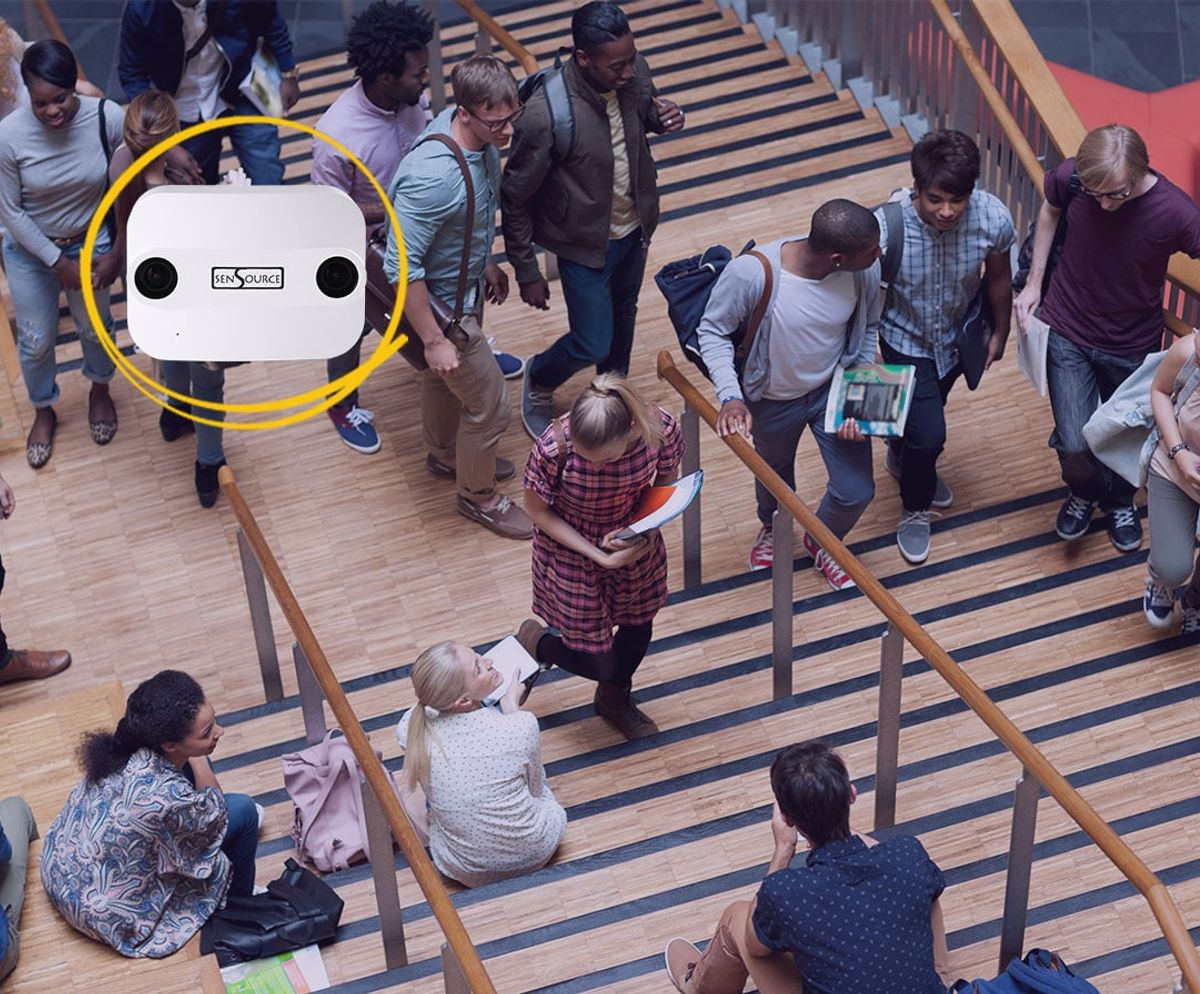
Which industries are most likely to utilize people counting technology?
Historically, libraries and retail were among the first industries to adopt people counter technology. Libraries relied on patron statistics to support government funding requests, while retailers used data to understand how many browsers converted into buyers. As organizations place greater emphasis on data-driven decision-making, adoption has expanded well beyond these early use cases.
Today, many government-owned and grant-funded organizations use people counting to support funding justification and reporting, much like libraries have for years. University student unions, museums, state visitor centers, and parks are just a few examples.
The amusement industry, in particular, has pushed the boundaries of what people counting data can do. Beyond simple entrance counts at the door, people counting technology is now used to calculate ride wait times, guest dwell time, and traffic patterns throughout a venue. Theme parks, family entertainment centers, zoos, and casinos leverage these insights to optimize operations and enhance the overall guest experience.
How accurate are modern-day systems?
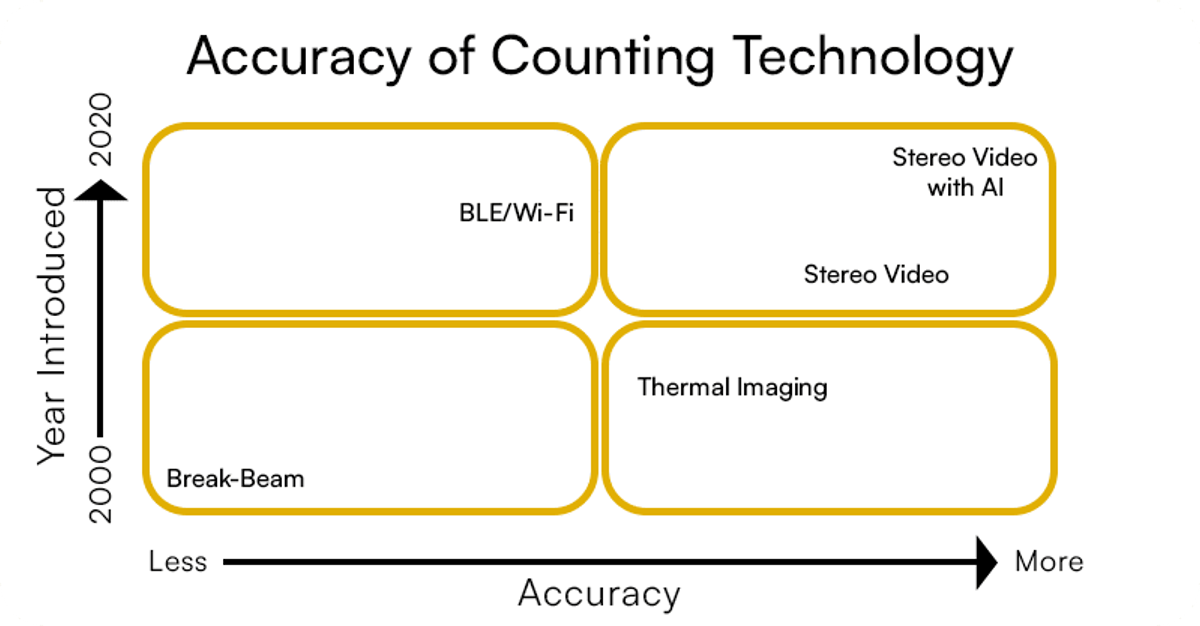
A modern-day accurate visitor counting system will see around 98% or greater accuracy. While no people counting system is 100% accurate and occasional errors may occur, best-in-class solutions consistently deliver reliable results. At SenSource, we guarantee 98% accuracy, and many of our customers routinely experience accuracy levels of 99% or higher in real-world environments.
Stereo-video technology is the most accurate way to count people, with consistent accuracy ratings of 98% or greater. It overcomes the limitations of simpler technologies like infrared break-beam and Bluetooth/WiFi beacons, such as placer.ai, which can struggle in high-density foot traffic environments.
Thermal imaging is still used today and typically achieves around 85% accuracy. It’s well suited for very low-light or total-darkness environments where a video lens can’t function, such as theaters or haunted houses.
The combination of AI (artificial intelligence) and stereo video hardware has further increased sensor accuracy. Layered with machine learning (an application of artificial intelligence), the ability to recognize people and exclude non-human objects is continuously improving. Scenarios that once caused inaccuracies, such as strollers, mannequins, or unusual movement patterns, are increasingly resolved as the system learns and adapts.
What’s the latest in people counting technology?
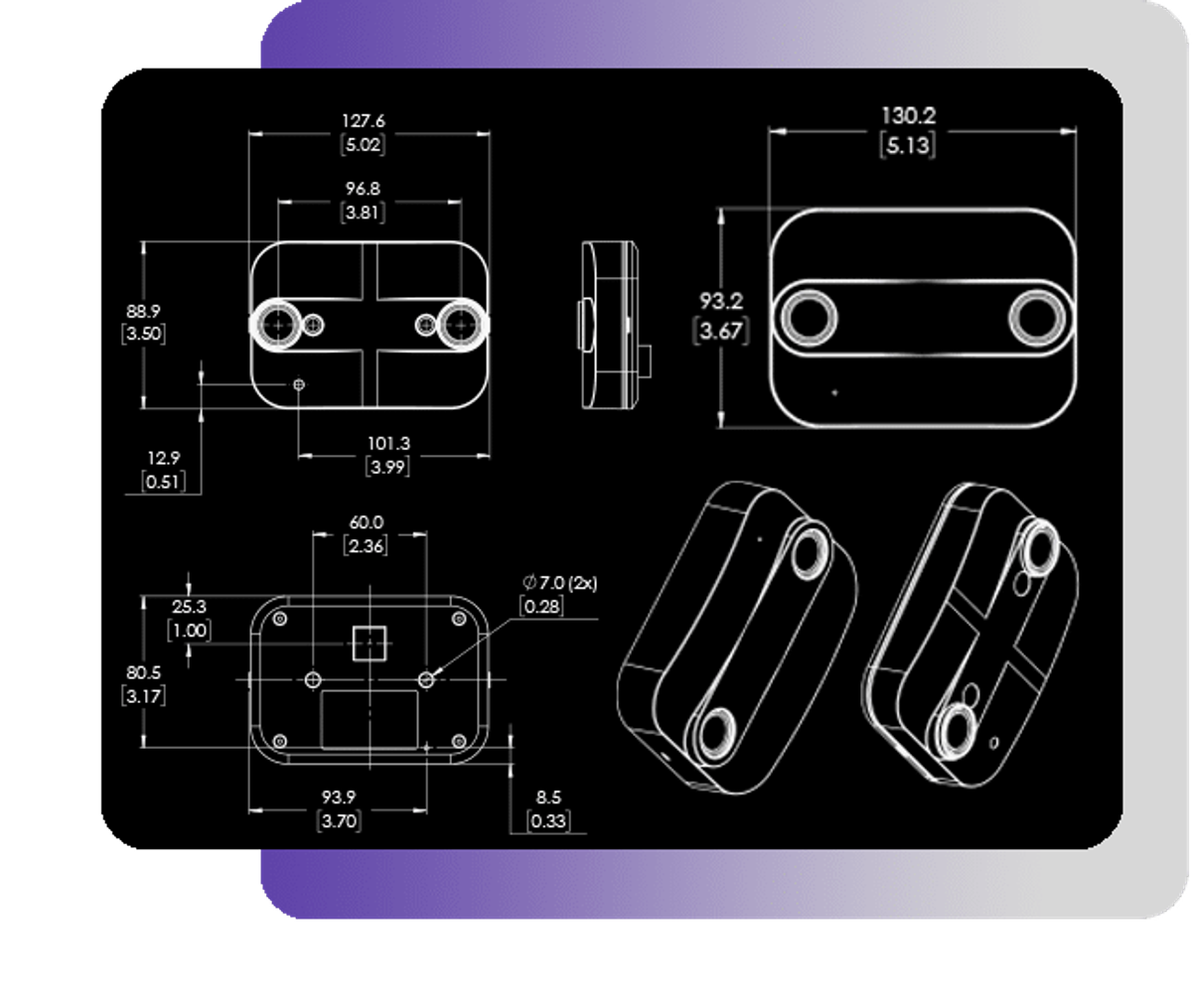
Today’s solutions go far beyond basic break-beam technology, with advances in computing power and hardware making stereo-vision, or stereoscopic, counting the most accurate and widely adopted approach.
Using dual lenses, stereo-vision sensors capture both an image and depth information within the detection area. This depth perception allows advanced algorithms to determine whether a person is moving through the space, significantly reducing false counts from carts, bags, boxes, or other non-human objects.
Beyond improved accuracy, modern people counting solutions are also designed for seamless deployment and data accessibility through the use of PoE (Power over Ethernet), which delivers both power and data through a single cable. Collected data is transmitted to a cloud-based reporting platform, where users can access robust analytics, generate reports, and integrate traffic data into existing business systems through APIs.
Looking ahead, LoRaWAN represents an emerging area of innovation. Still in the research and development phase, these devices use low-power wide-area networks to transmit data without hardwired connections or WiFi.
What to know before upgrading
Watch what you need to know before replacing a break-beam people counter.
A History of People Counting Devices
Photoelectric Break-Beam
In the early 2000s, break-beam counters were commonly installed on doorframes across the country. These units used a simple infrared beam to estimate foot traffic; each time the beam was broken, the system incremented a count. A small on-device display allowed staff to view daily totals and manually reset the counter.
Accuracy was the primary limitation of this approach. When groups entered side-by-side, the beam could be broken only once, resulting in undercounting. Overcounting was also common when someone paced back and forth through the doorway, such as while waiting for a companion or taking a phone call.
As more advanced technologies emerged, break-beam counters quickly became obsolete due to their lack of precision and reliability.
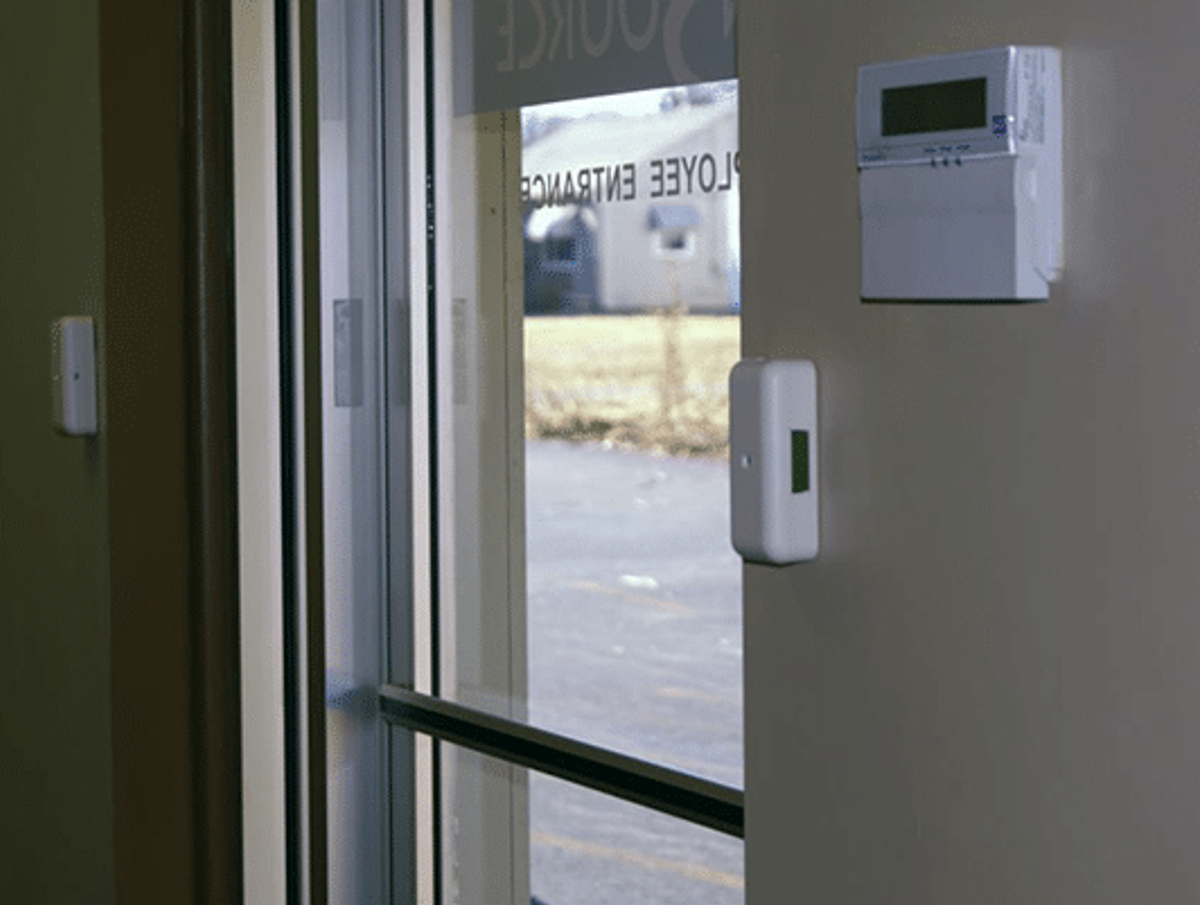
Photoelectric break-beam people counter installed on either side of a door frame
Thermal Imaging
Around 2010, thermal imaging people counting technology became the industry standard and, at the time, offered a significant improvement in accuracy. Mounted overhead, these sensors captured a top-down view of entrances and detected people based on heat signatures.
Thermal imaging enabled more accurate counting of groups walking together and excluded non-human objects like bags or carts. These devices were also PoE-enabled, allowing traffic data to be automatically transmitted to software platforms, eliminating the need for manual data collection.
However, thermal technology introduced new challenges. Environmental factors such as HVAC airflow or temperature fluctuations could impact accuracy. Additionally, if a person remained stationary long enough, the sensor could absorb them into the background reference image, resulting in a missed count.
After roughly a decade of widespread use, video-based solutions surpassed thermal imaging as the most reliable people counting option.

Thermal imaging people counter installed over a doorway using an extension pole
Stereo Video
Stereo-video sensors represent the most accurate people counting technology available today, consistently achieving accuracy rates of 98% or higher. This precision is driven by dual-lenses that capture depth information, advanced algorithms designed specifically to detect human movement, and intelligent sensor logic configured for each environment.
Ongoing validations and monitoring help identify and correct accuracy drift, ensuring reliable, long-term performance across a wide range of use cases.
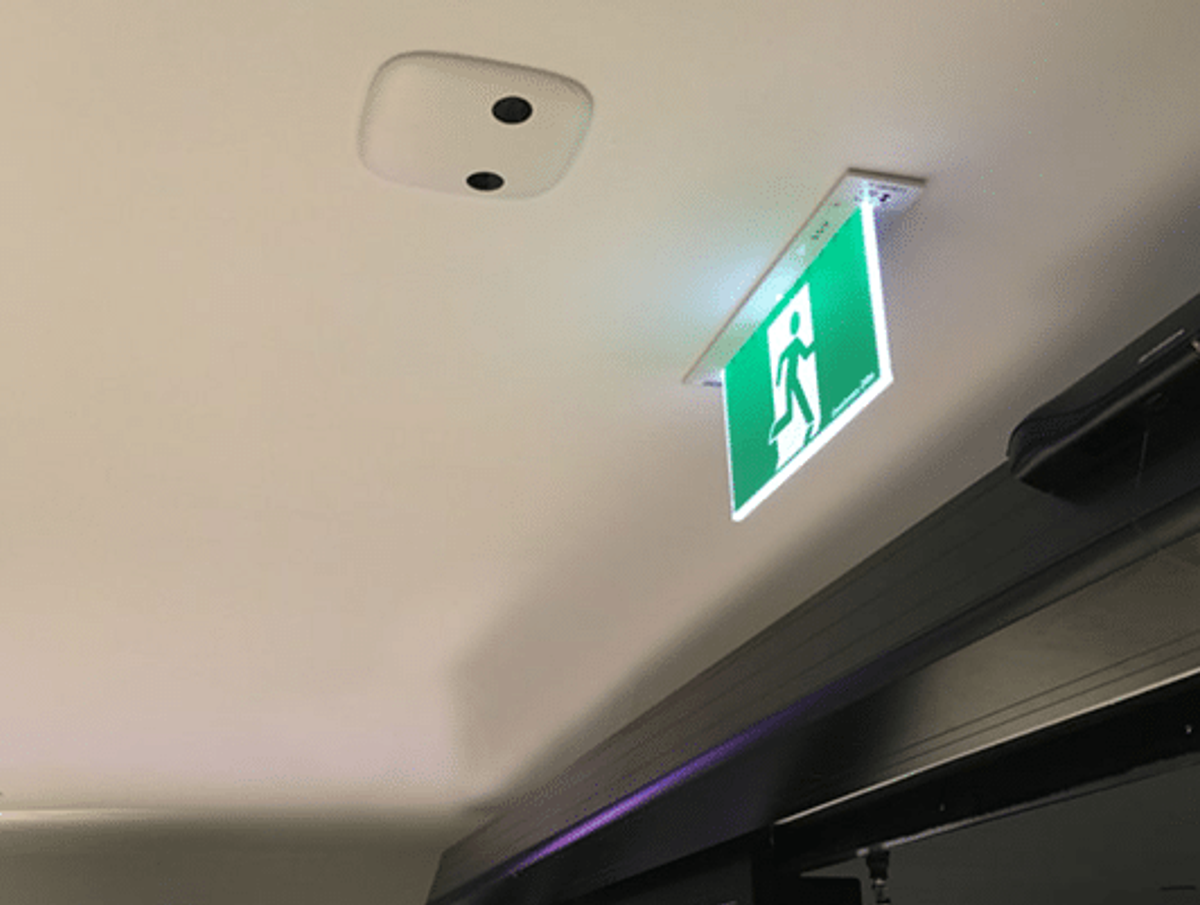
Stereo-video people counting sensor installed on a ceiling near an exit sign
Things to consider before implementation.
A people counting system is relatively easy to implement. Considering these few requirements ahead of time will save time and money during your implementation.

Determine network requirements
Loop in your IT personnel early on. They’ll need to open ports and gain access to your network in order for the sensor to communicate data to the reporting platform.

Identify sensor placement
Consider your architecture, ceiling heights and building material at the location the sensor will be mounted. For threshold counting, a sensor is typically installed on the ceiling above the entryway. If you have high ceilings, a historical building, modern design, or other architecture with complex ceiling types, you’ll need extra planning for installation and cabling.

Select a data ambassador
Determine who will be your people counting software admin to oversee the data, set up new users, contact technical support, and be the one to oversee overall adoption of the new data set within your company.
How much do people counting sensors cost?
The cost of a people counting system depends on the level of accuracy, technology, and reporting capabilities you need. Enterprise-level sensors that use 3D or AI technology typically offer 98%+ accuracy along with advanced data and reporting features, and generally range from $800 to $2,000 per sensor. Mid-range sensors, which provide moderate accuracy and more limited data, typically cost $300 to $700 per sensor. Basic sensors with lower accuracy and minimal reporting capabilities usually range from $50 to $300 per sensor.
Beyond the hardware itself, it’s important to factor in software licensing and installation costs, which can vary depending on the size and complexity of your deployment.
Hardware
The hardware consists of the sensor itself, which is a one-time fee. If ceiling-mounted, a site survey is needed to determine the quantity, model, and accessories.
Software
The software is an annual SaaS subscription that gives access to your data on the cloud, reporting tools, and technical support.
Installation
Installation is a variable cost based on your network requirements and the feasibility to run the cable and mount the sensor.
How many people counters do I need?
The number of people counting sensors required varies by location, as no two entrances or facilities are exactly alike. To determine the right setup, a field survey is typically conducted that includes measurements and photos of each entrance.
In many cases, a single sensor can cover a standard double doorway. Coverage area depends largely on mounting height; the higher the sensor is installed, the wider its field of view. For example, an eight-foot ceiling generally limits coverage to the width of a doorway, while a ten-foot ceiling can allow coverage of up to approximately 23 feet. An account manager will review your entrance dimensions and ceiling heights to recommend the appropriate number of sensors.
For wider entrances or unique layouts, multiple sensors can be combined to create a seamless, expanded field of view.
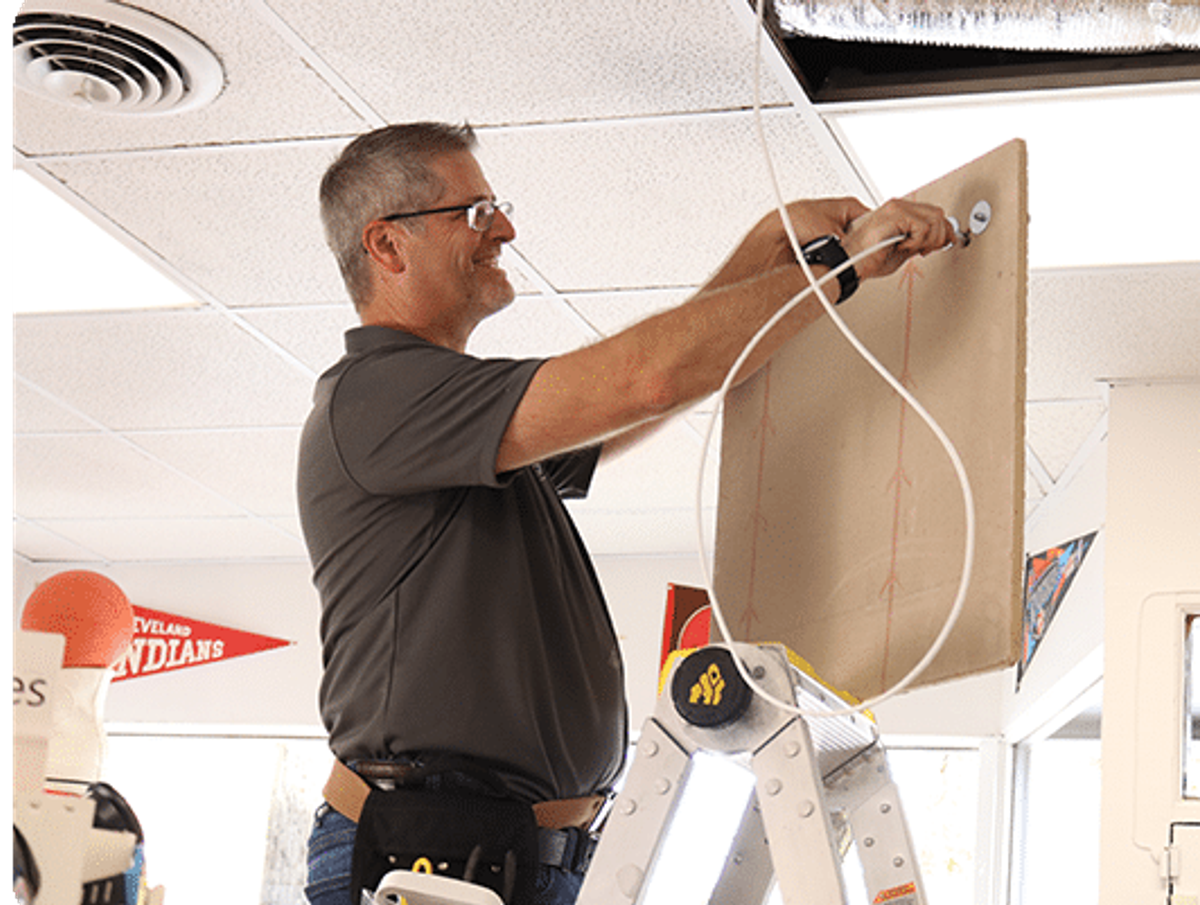
How is people counting hardware installed?
The installation process depends on the type of technology, but here are some general steps to follow:
Determine the location
The first step is to determine where to install the people counter sensor (or sensors). The ideal location is typically near the entrance or exit of a space where foot traffic is expected.
Install the hardware
Depending on the ceiling type, the hardware may include a sensor, mounting brackets, and ethernet cabling. Follow the manufacturer’s instructions to install the hardware in the chosen location.
Test the system
After installation, run tests to ensure it accurately counts people. This may involve conducting a trial run with a few people or testing it over a longer period of time.
Do people counting cameras pose a privacy concern?
People counting devices are designed with privacy in mind. They do not collect, record, store, or transmit any personally identifiable information, and they are not security cameras. No continuous video feed is recorded or saved to a DVR.
During installation, a short segment of low-resolution video may be temporarily recorded to verify sensor placement and counting accuracy. This validation footage is used solely for setup purposes and is not stored on the sensor, meaning past video cannot be accessed, replayed, or retrieved.
Privacy settings for this low-resolution validation feed are fully configurable, allowing you to balance guest privacy with the need to maintain accurate, reliable data based on your specific application.
What business metrics can be found using people counting data?
The data collected can be used to optimize operations, improve customer experience, and increase revenue. Here are 12 common KPIs (key performance indicators) that most businesses unlock with people counting data:

Foot Traffic
The total number of people entering a physical location over a specific period. This metric helps businesses understand the overall flow of visitors.

Conversion Rate
The percentage of people who visit a store and make a purchase. It’s calculated by dividing the number of transactions by the foot traffic.

Dwell Time
The average amount of time people spend inside a location or within a specified zone. This metric helps businesses understand customer engagement and the effectiveness of floor layouts or displays.

Peak Hours
Identifying the busiest hours of the day or days of the week when foot traffic is at its highest. This information can help businesses optimize staffing levels and resource allocation.

Traffic Patterns
Analyzing the movement of people within a space to understand popular routes, high-traffic areas, and potential bottlenecks.

Occupancy
Occupancy measures the number of people present in a specific area at a given time. This data can be crucial for compliance with safety regulations and optimizing space utilization.

Queue Length and Wait Times
Analyzing the length of queues and wait times in various areas, such as checkout counters or service desks, to improve customer experience.

Marketing Promotions
People counting data can help determine the effectiveness of marketing promotions by tracking changes in foot traffic.

Store Layout
People counting data can be used to analyze customer flow and make decisions about store layout and product placement.

Tailgating
People counting sensors can be used at an entrance to determine unauthorized access when a person piggybacks, or tailgates, an authorized user’s entry.

Forecasting
Accurate store traffic forecasting is founded on historical traffic trends and advanced prediction algorithms.

Space Utilization
Optimize space utilization such as within meeting rooms and auditoriums. Analyze how many people typically use a space to determine if restructuring or repurposing is needed.
What are the most important features to look for in a people counting solution?
Here are some key features to look for:
Accuracy
Gathering accurate data is paramount since even small errors can significantly impact decision-making processes based on the data. Buyer’s Guide on Accuracy
Scalability
Consider whether the system can be easily scaled up or down to accommodate changes in the size of the area you want to monitor. Flexibility allows for easy adjustments as your needs evolve.
Reporting
Real-time reporting is crucial for making immediate decisions and reacting promptly to changing situations, such as crowd management in retail stores or event venues.
Privacy and GDPR Compliance
With increasing concerns about privacy, it’s essential to choose a people counting solution that respects individual privacy rights and complies with relevant data protection regulations.
Integration Capabilities
The people counting solution should have the ability to integrate with your existing systems, for example, through an API call or using Power BI, to streamline data analysis and decision-making.
Durability
Depending on the environment in which the solution will be deployed, durability and resistance to harsh conditions, such as dust, humidity, or extreme temperatures, should be considered.
What level of business impact can be expected?
Integrating people counting data into your existing performance metrics can influence nearly every aspect of your organization, from day-to-day operations and financial efficiency to the overall guest experience.
One of the most immediate impacts is operational clarity. For example, the Hill Student Center at the University of Alabama at Birmingham historically staffed two student employees at the help desk throughout the day. After installing a new people counting solution, they gained visibility into peak and off-peak traffic patterns.
With this data in hand, leadership recognized that two staff members were unnecessary during slower periods. By adjusting staffing schedules to better align with actual foot traffic, the Hill Student Center reduced labor costs by $12,000 in the first year alone, without sacrificing service quality.
Who are the top end-to-end solution providers in the United States?
SenSource
We are the leading provider of people counting solutions that utilize advanced sensors and analytics to deliver accurate and actionable data for various industries.
ShopperTrak
ShopperTrak, part of Johnson Controls’ Sensormatic Solutions, specializes in retail analytics and provides people counting solutions to help retailers optimize store performance and customer experience.
RetailNext
RetailNext offers a comprehensive retail analytics platform, including people counting solutions that utilize video analytics and other technologies.
Dor
Dor Technologies uses a thermal sensing, battery-operated people counter to provide foot traffic data to retailers. Dor was acquired by Constellation in 2021 to expand its blockchain-focused product line.
When evaluating people counting suppliers, it’s important to consider the full picture, from company structure and longevity to technology and product approach. Ownership status can offer insight into how a company operates and where its priorities lie. Public companies, such as ShopperTrak, and venture-backed firms like RetailNext and Dor are accountable to investors and growth expectations. Privately held companies, like SenSource, operate independently of outside financial pressures.
Company history is another key factor. SenSource was founded in 2002, followed by RetailNext in 2007 (originally operating as BVI Networks) and Dor in 2015. ShopperTrak emerged around the same time as SenSource and was later acquired by Tyco in 2015, which merged with Johnson Controls in 2016. Today, ShopperTrak operates under the Sensormatic Solutions umbrella, though it is still commonly referred to as ShopperTrak within the industry.
From a technology standpoint, stereo-video sensors represent the most accurate people counting solution available today, consistently achieving accuracy rates of 98% or higher. This technology is used by ShopperTrak, RetailNext, and SenSource. ShopperTrak and RetailNext develop their sensing hardware internally, while SenSource takes a technology-agnostic approach—evaluating and sourcing best-in-class hardware from multiple manufacturers. Dor, by comparison, relies on thermal imaging technology, which typically delivers accuracy closer to 85%.
Across the market, modern people counting suppliers provide proprietary software platforms for reporting and analysis, and most also offer APIs that allow foot traffic data to integrate with existing business systems.
| Feature | SenSource | ShopperTrak | RetailNext | Dor |
|---|---|---|---|---|
| Measurement of Success | Client Satisfaction; Financial Gains Reinvested into Company | Financial Gains for Investors | Financial Gains for Investors | Financial Gains for Investors |
| Ownership Status | PrivateSame owners since founded in 2002 | PublicPurchased by Tyco in 2015 Tyco merged with Johnson Controls 2016 | Private with VC Backing2007-2011 operating as BVI Networks 2012-present operating as RetailNext Same owners since founded in 2007 | Private with VC BackingSame owners since founded in 2015 |
| Target Market | Multiple-Verticals | Retail | Retail | Retail |
| Hardware Technology | Technology Agnosticvideo-based | Single-SourceOrbit / Sensormatic video-based | Single-sourceAurora video-based | Single-sourceDor thermal imaging |
| Accuracy | 98%+ | 98%+ | 98%+ | 85% |
| Cloud-based Software | YesVea Analytics Platform | YesShopperTrak Analytics Suite | YesRetailNext Traffic 2.0 | YesDOR Foot Traffic Monitor |
| Monthly Software Rate | $$ | $$$ | $$$ | $ |
| API | Yes | Yes | Yes | Yes |
Gain insights, save money.
Our people counting system measures foot traffic with precision and gives you accessible data to make critical decisions.